How to Jump-Start a Car Safely
Procedure and polarity matter more than any spec on the box. Always follow your jump starter's manual and your vehicle owner's manual for the exact clamp order and sequence for your equipment — this page provides general safety background, not a step-by-step replacement for those documented instructions.
The one thing to know: Jump-starting involves both procedure and polarity risk: connecting cables in the wrong order or polarity can cause sparks, arcing, or damage to a vehicle's electronics. Always follow the jump starter's manual and your vehicle owner's manual for the correct clamp order (typically positive-to-positive first, then negative-to-a-grounded-metal-point, not the dead battery's negative terminal) — this site is a specification reference, not a substitute for those instructions.
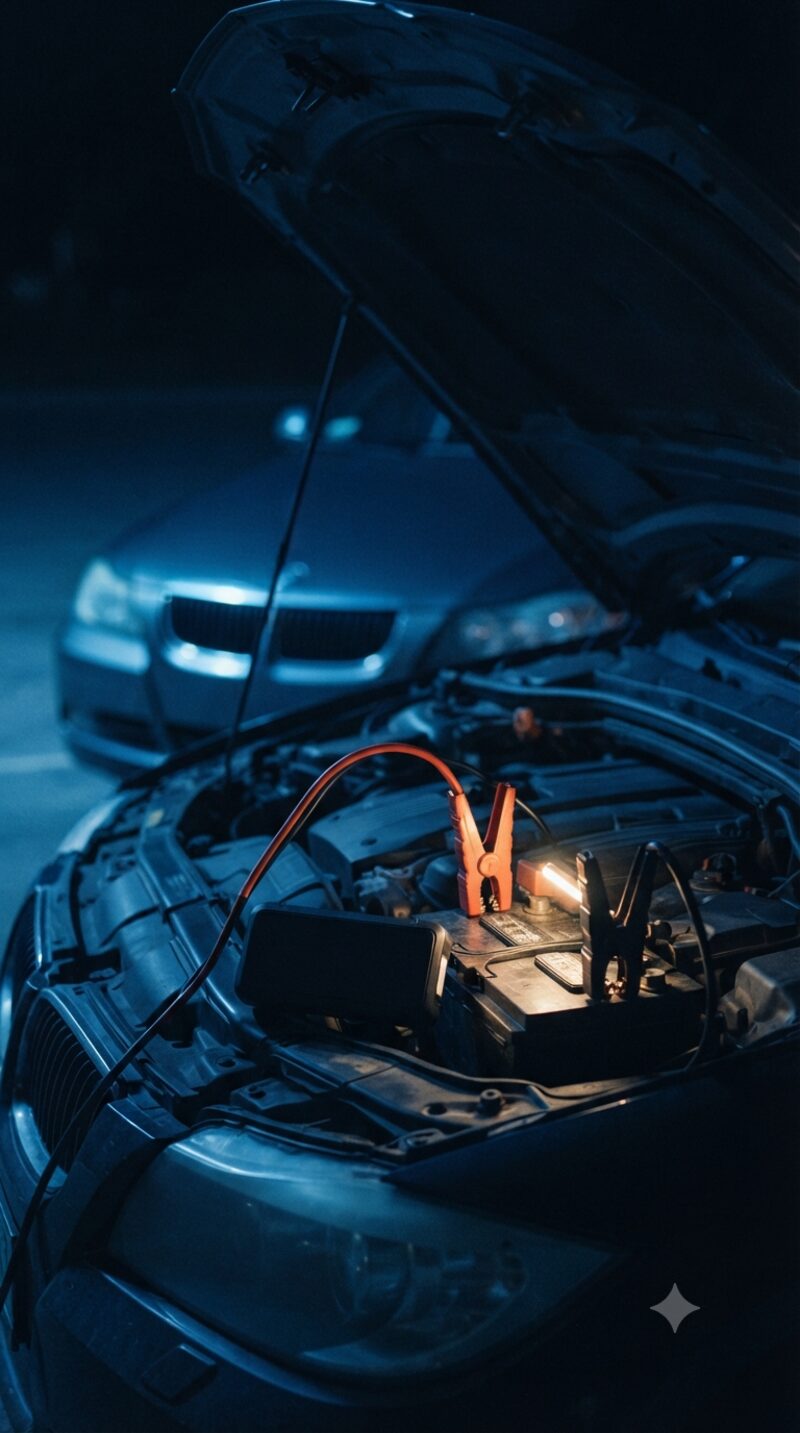
General background — not a substitute for your manual
Common automotive safety guidance describes connecting the positive clamp to the dead battery's positive terminal first, then the negative clamp to a grounded, unpainted metal point on the vehicle (rather than the dead battery's own negative terminal) to route any spark away from the battery. Whether this exact sequence applies to your jump starter and vehicle should be confirmed in the specific manuals provided with your equipment — conventions and built-in protections vary by manufacturer and model.
Why we don't publish a universal step-by-step here
Jump starter manuals differ in their required sequence, built-in protection features, and warnings for specific vehicle types (including hybrids and EVs with sensitive high-voltage systems). Publishing one generic procedure risks contradicting your specific unit's documented instructions, which is why this page frames the principles rather than prescribing exact steps.
This page is general safety background, not a substitute for your jump starter's manual or your vehicle owner's manual.
Frequently Asked Questions
Always follow your specific jump starter's manual and your vehicle owner's manual first, since procedures vary by manufacturer and vehicle. Generally described conventions include connecting the positive (red) clamp to the dead battery's positive terminal first, then the negative (black) clamp to a grounded, unpainted metal point on the vehicle rather than the dead battery's negative terminal — but treat this as general background, not a substitute for your documented procedure.
Some standard automotive safety guidance describes this as a way to route any spark away from the battery itself, which can vent flammable hydrogen gas. Whether this applies to your specific jump starter and vehicle should be confirmed in the provided manuals, since built-in reverse-polarity and spark protection varies by product.
Many manuals recommend turning off the vehicle's ignition and accessories before connecting a jump starter, and some jump starter manuals specify a particular order of operations. Follow the specific manual for your unit and vehicle rather than a generic assumption.
Modern vehicles, especially hybrids and EVs, can have specific jump-starting instructions or warnings in the owner's manual. If you're unsure, consult your vehicle owner's manual or a qualified mechanic before connecting any jump starter.